Google Workspace AI Dashboard
A group Design Thinking project answering a master's brief: improve the digital work experience through AI in the Google ecosystem. The outcome is a concept for a centralised AI dashboard that reduces cognitive load, with a compact assistant, smart prioritisation and data visualisation across Workspace.
Role
UX Research & UI Design
Client
Concept Project
Industry
Productivity / SaaS
Year
2026
Team
Group project
Tools
Figma · FigJam
Methods
Design Thinking · Survey (n=50)
Deliverables
UX Research, Information Architecture, Dashboard Design, Data Visualization, UI Design
People live inside the Google ecosystem all day, but the tools don't help them manage attention, priorities or mental load. The brief was open: how might AI genuinely improve the digital work experience across Google Workspace, without just adding more noise?
We ran a full Design Thinking process: desk research on AI at work and remote productivity, netnography on real user reviews and forums, and a survey of 50 intensive Google-ecosystem users. The numbers were clear:
The recurring pattern was notification fatigue and cognitive overload, and a reactive culture instead of strategic planning, the ecosystem acts as an 'external brain'. Tool by tool: Meet is too minimal for complex contexts; Calendar doesn't fail technically, it fails because it assumes an organised habit many users don't have; Gmail is powerful but pushes people into reacting instead of working. The core insight: the problem isn't technical, it's cognitive and behavioural.
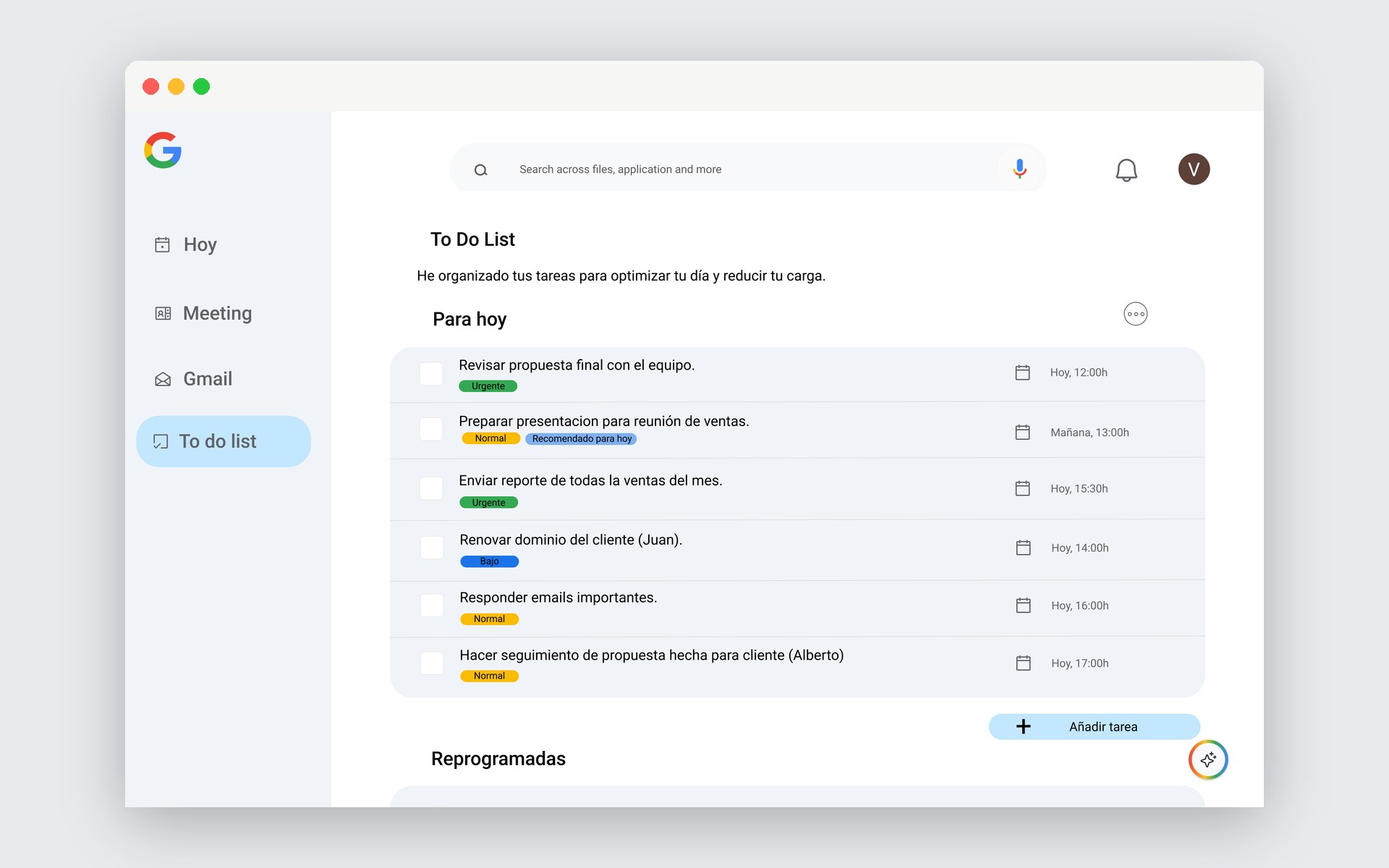
So instead of adding features, we designed a layer that reduces load. We synthesised needs into personas and an empathy map, then prioritised ideas with MoSCoW and a utility/viability matrix. The concept: a visual, customisable dashboard that connects all of Workspace, with a compact AI assistant, smart event and task prioritisation, meeting transcription and summaries, error prevention (duplicate files, unsent attachments) and a cognitive-load indicator, always with human approval.
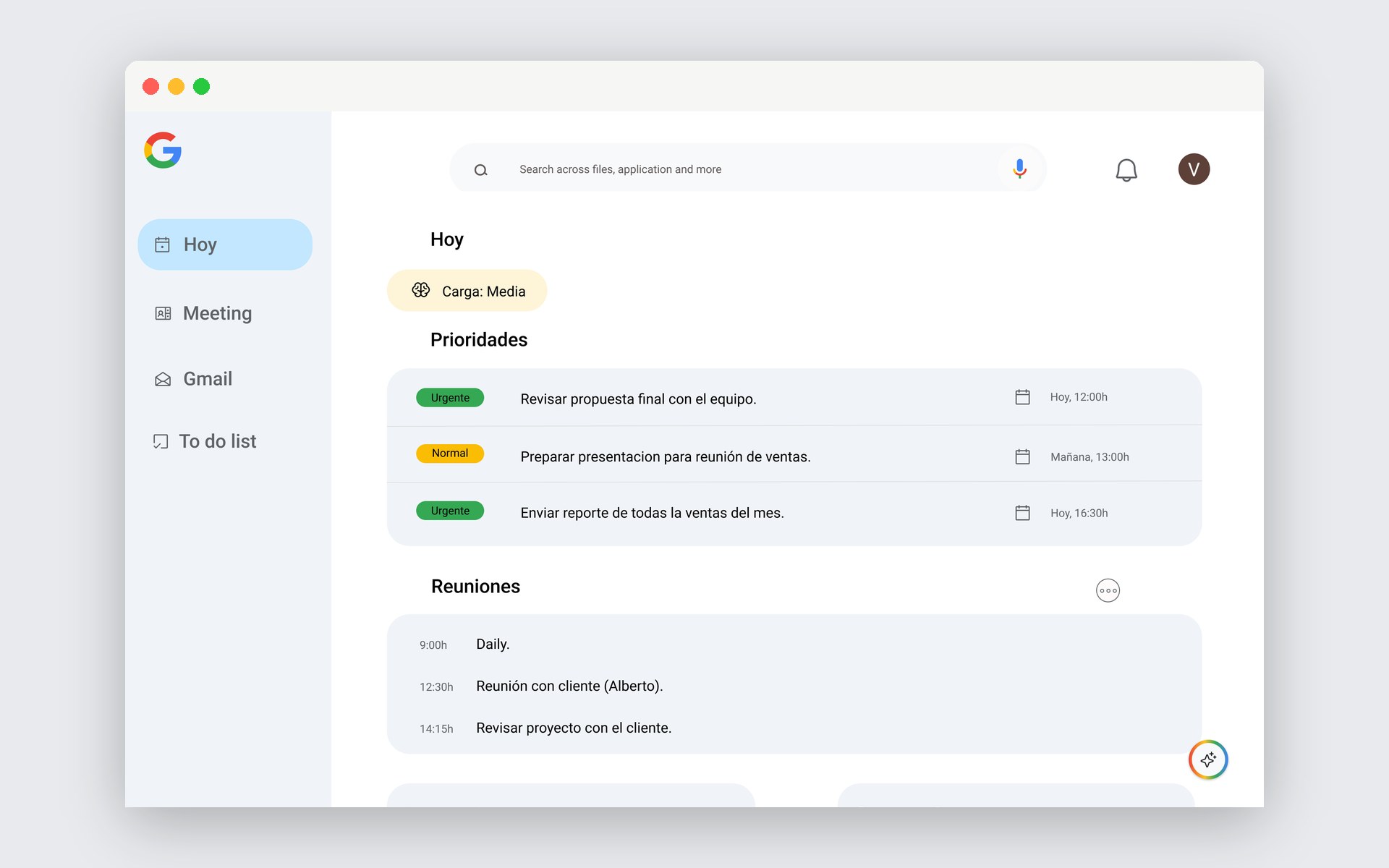
I focused on the information architecture, data visualisation and the compact AI assistant, presenting a lot of information without adding to the overwhelm the research had surfaced.
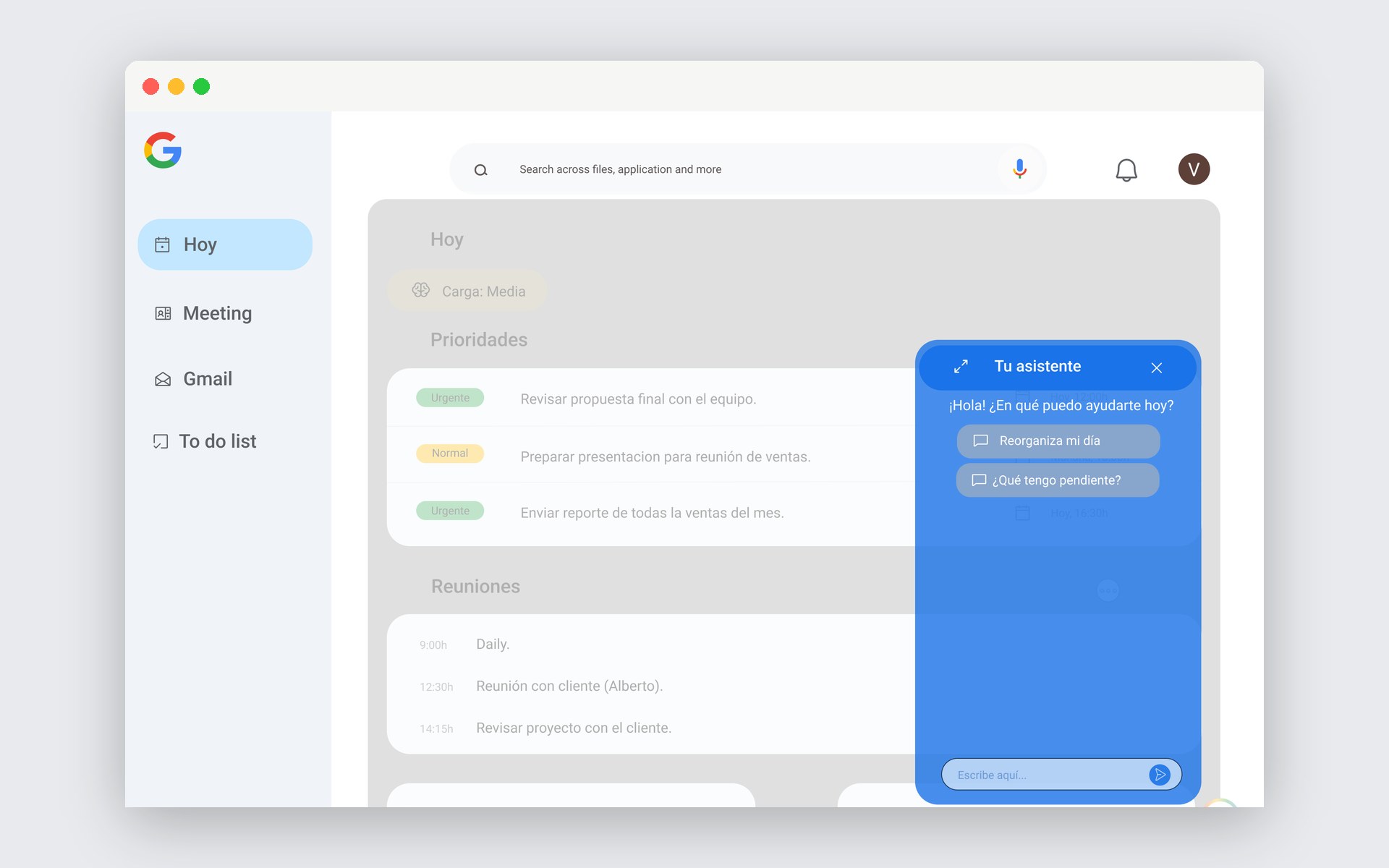
A concept that reframes AI in Google Workspace as a way to protect attention and reduce mental load, not just another layer of features.
This project sharpened my research muscle: turning desk research, netnography and 50 survey responses into a clear, defensible problem, and resisting the urge to solve it with more features. The strongest insight came from reframing a 'technical' problem as a human one.